

NAVYUG VIDYABHAVAN TRUST
Surat is one of Gujarat’s most industrialized cities, renowned globally for its diamond industry, jari work, and man-made textiles. Located on the banks of the Tapti River, it is among the fastest-growing industrial cities in the nation. The city is also emerging as a major center for dyes, chemicals, intermediates, textile machinery, plastic technology, and agro-based industries—attracting skilled, semi-skilled, and unskilled workers from across the country.
The rapid growth of the city over the past 60 years transformed Surat into a leading commercial hub of South Gujarat, bringing with it increasing challenges in the field of higher education. The demand for higher education facilities grew significantly, creating an imbalance between supply and demand.
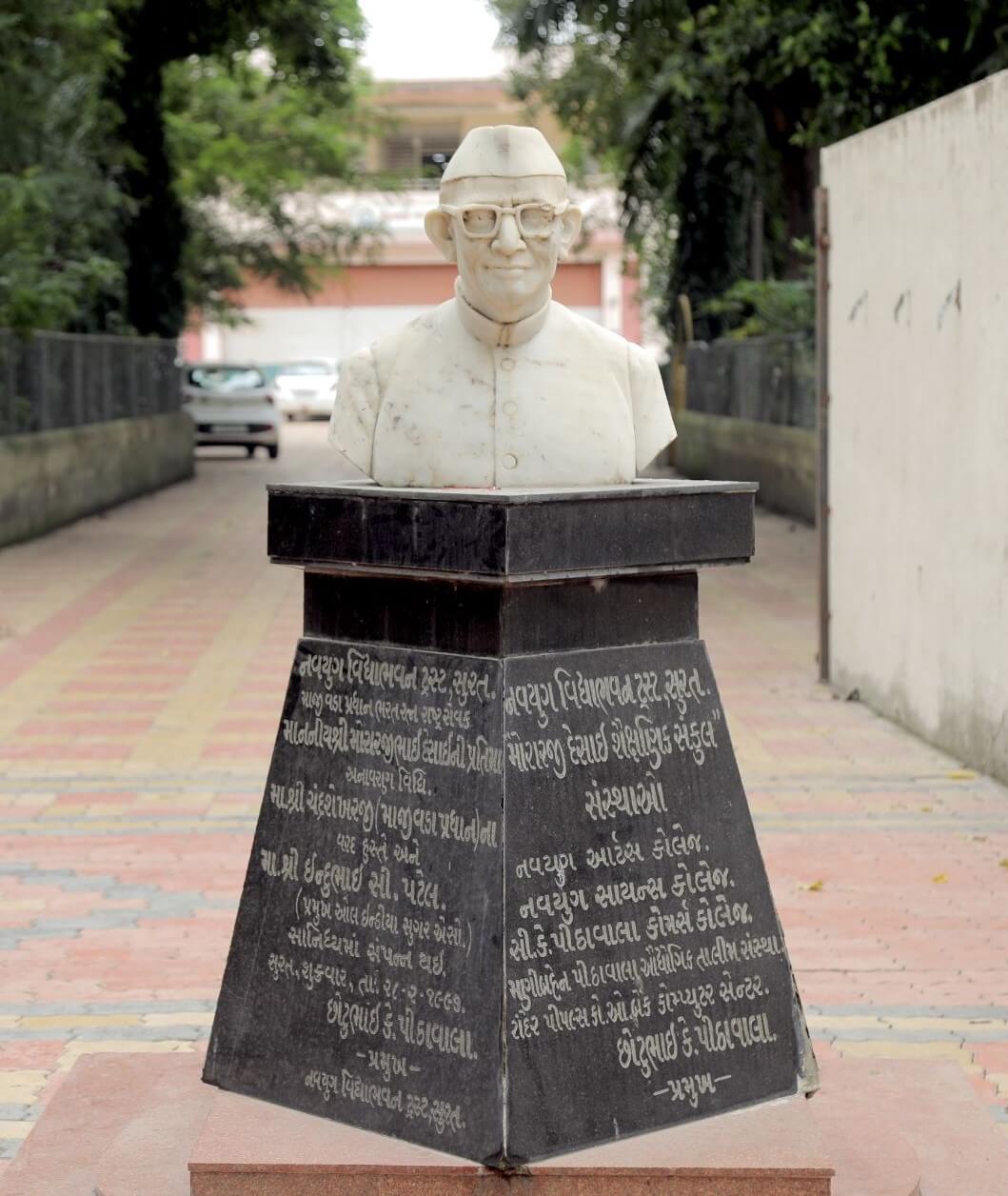
To bridge this gap, the Navyug Vidyabhavan Trust was founded by the Vashi family and later strengthened through the support of Late Shri Morarji Desai, Former Honorable Prime Minister of India, who served as the President of the Trust. Shri C. K. Pithawala joined as Trustee and, from 2 May 1990, served as the President.
The primary aim of the Trust is to provide higher education opportunities irrespective of caste, community, gender, or religion and to promote research in both the exact and social sciences.
The pace of growth of the city accelerated during the past 60 years, and Surat became a dominant center of commercial activity in South Gujarat. This, in its wake, brought some problems also, mainly in the field of higher education. The demand for facilities for higher education grew rapidly. It was primarily to correct the imbalance between demands and supply that the Navyug Vidyabhavan Trust was founded by the Vashi family and later by the Late Shri Morarji Desai, the Former Honorable Prime Minister of India, who became President, and Shri C.K. Pithawalla became Trustee from dt. 2-5-1990 when Shri C.K. Pithawalla became President. The aims and objectives of the Trust are to provide facilities for higher education to students without consideration of caste, community, sex, or religion and to undertake research in the exact and social sciences.